

Beef & Broccoli
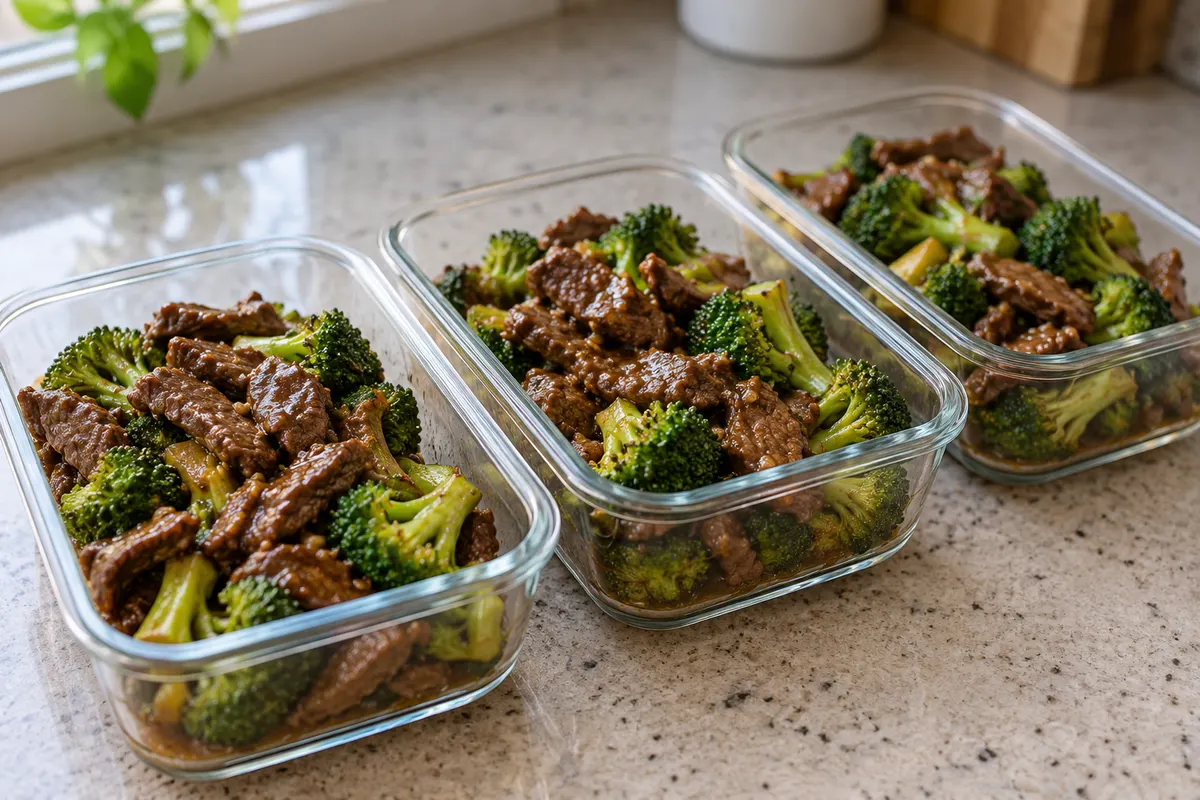
Beef and broccoli works for meal prep because the protein, vegetable and sauce cook in one pan and can be divided without assembling a complicated meal. Thin strips of flank steak cook quickly, while broccoli provides texture that contrasts with the glossy sauce. A shallow layer in each container is easier to reheat evenly than a tightly packed mound.
Beef and broccoli works for meal prep because the protein, vegetable and sauce cook in one pan and can be divided without assembling a complicated meal. Thin strips of flank steak cook quickly, while broccoli provides texture that contrasts with the glossy sauce. A shallow layer in each container is easier to reheat evenly than a tightly packed mound.
This batch makes three servings as listed. Rice or noodles are optional additions rather than part of the existing ingredient list or nutrition estimate. Cook a side separately if you want one, and portion it alongside the beef instead of relying on sauce to flavor a whole container of plain grain.
📊 Estimated Per Serving
🥗 Ingredients for 3 servings
Slice the flank steak across the grain so the muscle fibers are shorter. Cut broccoli into similarly sized florets and split thick stems so they cook at a similar pace. Whisk the cornstarch into cool sauce liquid before it reaches the pan; adding dry starch to hot liquid encourages lumps. The quarter-cup of water in the method loosens the sauce without adding another purchased ingredient.
👨🍳 Instructions
- 1
Prepare everything first
Whisk soy sauce, oyster sauce, brown sugar, cornstarch and one-quarter cup water until smooth. Keep the sauce beside the stove. Slice beef on a separate board from ready-to-eat ingredients, then wash the board and utensils. Pat the beef surface dry so excess moisture does not immediately steam in the pan.
- 2
Cook the beef in batches
Use part of the listed sesame oil in a skillet over medium-high heat, avoiding smoking the oil. Spread beef in a loose layer and turn as it browns. Work in batches rather than crowding the skillet. For steak strips, verify 145°F with a suitable thermometer and allow a three-minute rest before serving. Keep cooked beef on a clean plate.
- 3
Steam the broccoli briefly
Add broccoli and a splash of water to the skillet. Cover until the stems begin to soften, then uncover and let excess water evaporate. Add garlic near the end so it becomes fragrant without scorching. Broccoli should be tender enough to eat but still hold its shape for reheating.
- 4
Finish the sauce
Stir the sauce again because starch settles. Return beef and accumulated juices to the skillet, pour in sauce and stir until it bubbles and coats the ingredients. Add any remaining sesame oil for flavor. If the sauce becomes too thick, loosen it with a small splash of water before dividing among three containers.
Batching and Reheating
Use three shallow, lidded containers. If doubling the recipe, double ingredients but keep searing in small batches; a crowded pan changes the cooking method. Freeze individual portions in freezer-safe containers if they will not be eaten within the refrigerator window. Broccoli softens after freezing, so keep it slightly firmer during the first cook if frozen texture matters to you.
Reheat a portion covered loosely in the microwave, stirring midway so sauce and beef heat evenly. Add a small splash of water if the sauce has set firmly. A skillet with a lid also works: warm gently with a little water, stir and check that the leftovers reach 165°F. Reheat only the portion you plan to eat.
Cooling, Storage and Transport
Divide cooked food into shallow containers and refrigerate within two hours of cooking, or within one hour when the surrounding temperature is above 90°F. Do not leave a large batch on the counter until completely cold. Keep the refrigerator at 40°F or below. Use properly chilled cooked leftovers within three to four days; freeze later portions promptly instead of extending the refrigerator window.
Label containers with the preparation date. Thaw frozen portions in the refrigerator, and reheat leftovers to 165°F throughout, checking the center with a food thermometer. For a packed lunch, keep food cold with an insulated bag and ice packs until refrigeration is available. Discard food that has exceeded safe time or temperature limits; smell and appearance cannot establish safety.
Variations and Swaps
Use tamari labeled gluten-free in place of soy sauce if needed, and check the oyster sauce separately because it can also contain wheat. A mushroom-based stir-fry sauce can replace oyster sauce for a different flavor, but it does not make the beef dish vegetarian. Bell pepper can replace some broccoli; add it later if you want a firmer bite. Swaps change the nutrition estimate.
Frequently Asked Questions
Why did the beef become chewy?
Thick slices, cutting along the grain and prolonged cooking can all make flank steak harder to chew. Slice thinly across the grain and avoid repeatedly cooking the beef while waiting for the vegetables or sauce to finish.
Can I use frozen broccoli?
Yes. Expect it to release water. Cook off excess moisture before adding the sauce and avoid prolonged steaming. The final texture will usually be softer than a batch made with fresh florets.
Food-safety references: USDA leftover storage guidance and FoodSafety.gov cooking and reheating temperatures.
For planning across several recipes, read how long meal prep lasts, explore the macro planning guide, or return to all recipes.
Recipe guidance updated . Nutrition figures are the existing recipe estimates per serving. Ingredient brands, portion sizes, optional additions and substitutions change them; they have not been recalculated for your ingredients.