

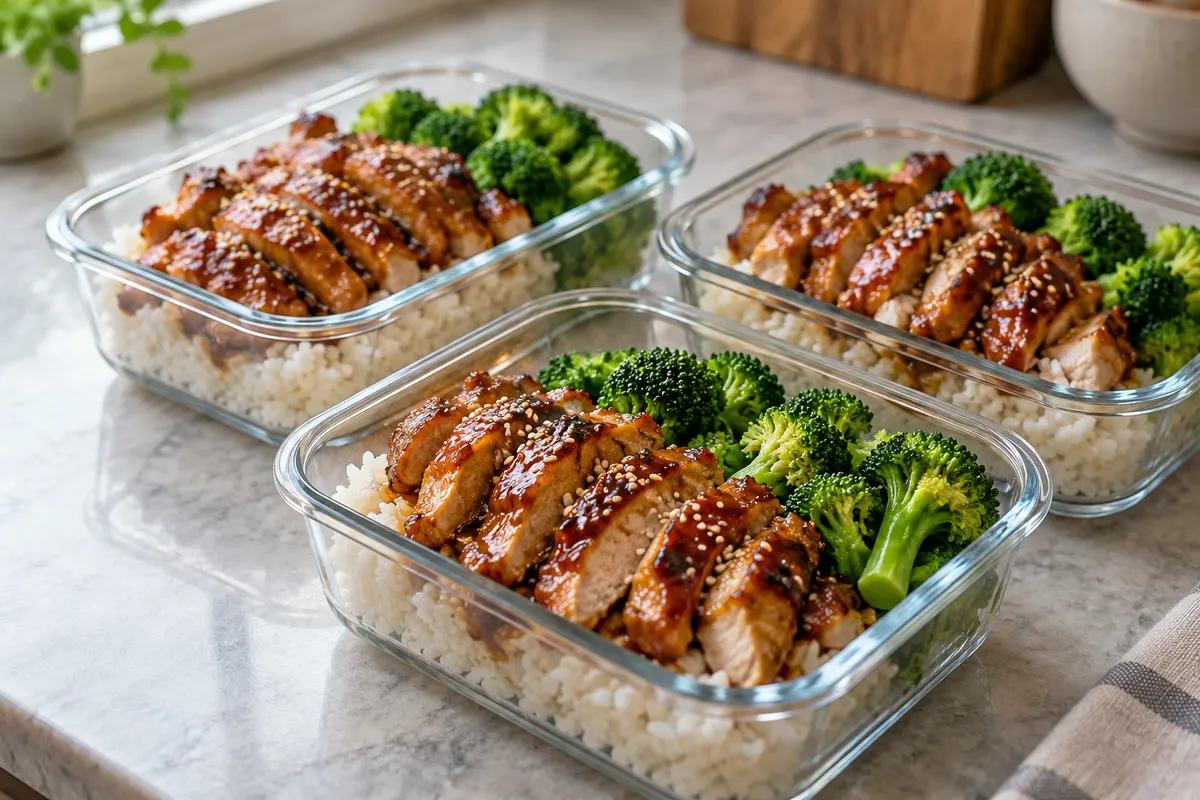
Chicken Teriyaki Bowl
A teriyaki bowl is easy to portion because chicken, rice and broccoli can each be divided separately. The sauce gives reheated rice some moisture, while boneless thighs offer a forgiving cut for a make-ahead meal. Cooking the components separately also lets you stop the broccoli before it becomes too soft.
A teriyaki bowl is easy to portion because chicken, rice and broccoli can each be divided separately. The sauce gives reheated rice some moisture, while boneless thighs offer a forgiving cut for a make-ahead meal. Cooking the components separately also lets you stop the broccoli before it becomes too soft.
The existing batch serves three. Its ingredient list includes two cups of jasmine rice, and the original method says to rinse and cook it, so treat that amount as dry rice. Cooked yield varies with the package and method. Divide the finished rice among the three servings rather than assuming a fixed cooked-cup yield.
📊 Estimated Per Serving
🥗 Ingredients for 3 servings
Keep the listed low-sodium soy sauce, mirin, vinegar, sugar and ginger together for the sauce. Mirin contributes sweetness as well as flavor, so taste the fully cooked sauce before adding extra sugar. Use boneless chicken thighs of similar thickness for more even cooking. Sesame seeds are a finishing ingredient. If sesame, soy or wheat is an allergen concern, check each packaged ingredient and use suitable alternatives.
👨🍳 Instructions
- 1
Start rice and sauce
Rinse the dry jasmine rice, then cook it with the water amount and method on its package. Whisk soy sauce, mirin, rice vinegar, brown sugar and grated ginger in a separate bowl. Keep sauce utensils away from raw chicken until cooking. Set out three shallow containers so cooked rice can be portioned promptly.
- 2
Sear the chicken
Pat thighs dry and place in a nonstick skillet over medium-high heat; use a little cooking oil only if your pan needs it. Cook in an uncrowded layer, turning when the underside releases and browns. Time varies with thickness, so treat the original five-minutes-per-side suggestion as a starting estimate rather than proof of doneness.
- 3
Glaze and check temperature
Pour the prepared sauce into the skillet and lower the heat to a simmer. Turn chicken so both sides become coated. Continue until the thickest part reaches 165°F on a food thermometer. Sauce that has touched raw chicken must be cooked thoroughly with the chicken; do not reserve it as an uncooked finishing drizzle.
- 4
Steam and portion
Steam broccoli until tender-crisp. Let the cooked chicken rest briefly on a clean board, then slice. Divide rice, broccoli and chicken among three containers and distribute the cooked sauce. Finish with sesame seeds. If you add cooking oil or change the rice quantity, the existing nutrition estimate will no longer describe precisely the same ingredients.
Meal-Prep Containers and Reheating
Use containers with enough room to stir the rice. Keep broccoli in its own compartment if you prefer less sauce on the vegetables. For a double batch, use a larger rice pot but sear chicken in several rounds. Freeze complete portions in freezer-safe containers, or freeze chicken and rice separately if you want to add freshly cooked broccoli later.
Reheat rice and chicken covered loosely in the microwave with a small splash of water. Stir the rice and turn the chicken midway, then verify 165°F throughout. Rice also needs prompt cooling and refrigeration; leaving it in a switched-off rice cooker does not provide safe storage unless the appliance is actively maintaining a safe hot-holding temperature.
Cooling, Storage and Transport
Divide cooked food into shallow containers and refrigerate within two hours of cooking, or within one hour when the surrounding temperature is above 90°F. Do not leave a large batch on the counter until completely cold. Keep the refrigerator at 40°F or below. Use properly chilled cooked leftovers within three to four days; freeze later portions promptly instead of extending the refrigerator window.
Label containers with the preparation date. Thaw frozen portions in the refrigerator, and reheat leftovers to 165°F throughout, checking the center with a food thermometer. For a packed lunch, keep food cold with an insulated bag and ice packs until refrigeration is available. Discard food that has exceeded safe time or temperature limits; smell and appearance cannot establish safety.
Variations
Chicken breast can replace thighs, but use temperature rather than a fixed cooking time to avoid drying it out. Try green beans instead of broccoli, allowing for their different cooking time. A different grain can replace jasmine rice if you follow its own package directions. Reduced-sodium soy sauce still contains sodium; choose ingredients around your needs rather than treating the name as a dietary guarantee.
Frequently Asked Questions
Why is the sauce thin?
This sauce reduces in the pan rather than relying on cornstarch. Let it simmer until it coats the chicken, watching carefully near the end. It will also thicken a little as it cools. Avoid boiling it so long that the sugar scorches.
Can the bowls be eaten cold?
Properly cooked and continuously refrigerated components can be served cold. Keep the bowl cold during transport and follow the same three-to-four-day leftover limit. Reheating is not a way to rescue food that was stored unsafely.
Food-safety references: USDA leftover storage guidance and FoodSafety.gov cooking and reheating temperatures.
For planning across several recipes, read how long meal prep lasts, explore the macro planning guide, or return to all recipes.
Recipe guidance updated . Nutrition figures are the existing recipe estimates per serving. Ingredient brands, portion sizes, optional additions and substitutions change them; they have not been recalculated for your ingredients.