

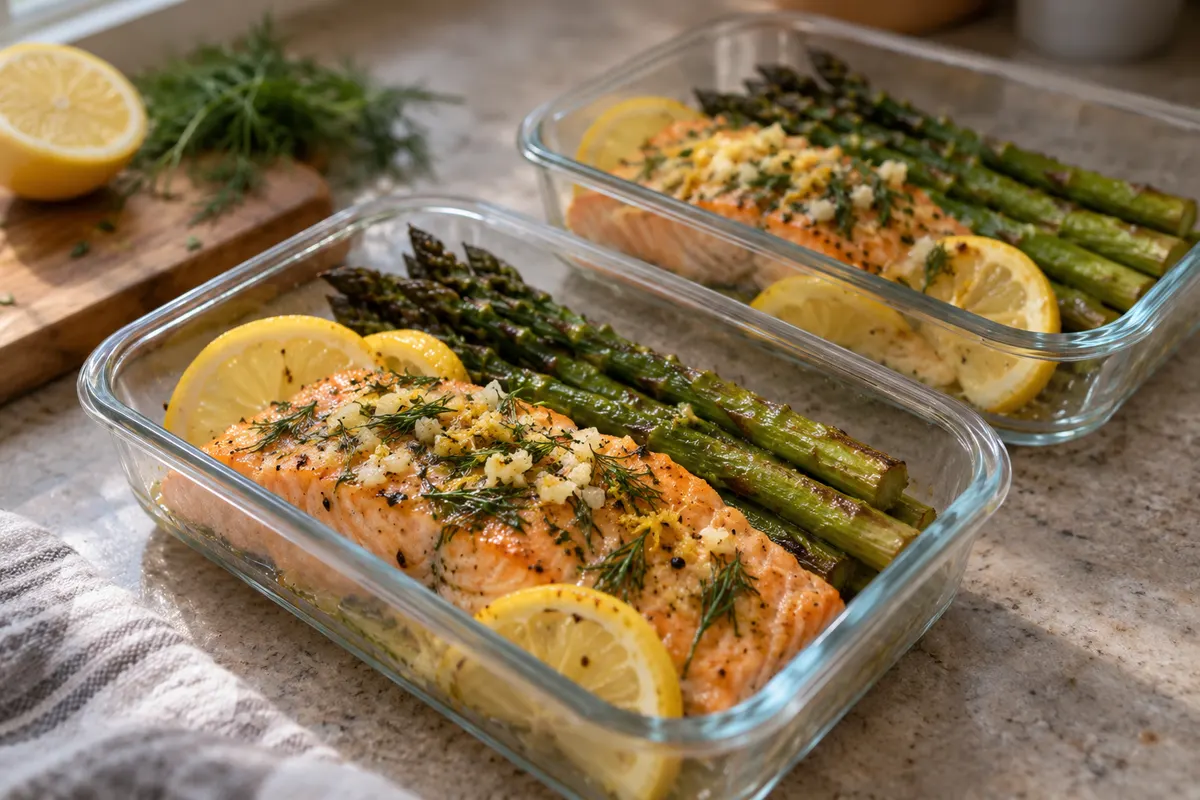
Lemon Herb Salmon
Lemon-herb salmon is a useful small-batch meal when you want two portions rather than a full week of identical lunches. The fish cooks quickly, and lemon, garlic and dill provide flavor without a separate sauce recipe. Making a modest batch also lets you plan to eat fish early in your meal-prep rotation.
Lemon-herb salmon is a useful small-batch meal when you want two portions rather than a full week of identical lunches. The fish cooks quickly, and lemon, garlic and dill provide flavor without a separate sauce recipe. Making a modest batch also lets you plan to eat fish early in your meal-prep rotation.
The recipe makes two servings from two fillets. Optional asparagus is included in the original ingredient list, but additional grains or bread are separate choices. Have two shallow containers ready and keep any fresh garnish away from the raw-fish preparation area.
📊 Estimated Per Serving
🥗 Ingredients for 2 servings
Pat the salmon dry and check for pin bones before cooking. Fillets with similar thickness are easier to cook together than one thick center piece and one thin tail piece. Zest the washed lemon before juicing it. Keep the zest and some dill for the finish. The listed olive oil is for the pan; use a suitable skillet and avoid heating it until it smokes. Trim woody asparagus ends if using the optional side.
👨🍳 Instructions
- 1
Prepare and season
Dry the fillets with a clean paper towel and season with salt, pepper and half the chopped dill. Wash hands after handling raw fish. Use a separate clean plate for cooked portions. If the fish was frozen, thaw it in the refrigerator according to package instructions before starting this method.
- 2
Sear the fish
Warm olive oil in a skillet over medium-high heat. Place salmon skin-side up if it has skin, and let the first surface brown before turning carefully. The original four minutes on the first side and three to four on the second are only estimates. Thick fillets may need more time; thin pieces may need less.
- 3
Add lemon and garlic
Lower the heat before adding minced garlic around the fish so it does not scorch. Add lemon juice carefully because it can sputter in hot oil. Spoon some pan liquid over the fillets and continue cooking until the thickest part reaches 145°F. Use a food thermometer rather than the browned surface as your main check.
- 4
Finish and portion
Add remaining dill and lemon zest. Steam the optional asparagus separately until it is as tender as you prefer. Place one fillet in each shallow container, with the side alongside rather than buried underneath. Spoon over the pan juices to provide moisture for reheating. Refrigerate promptly after a brief handling period.
Plan for Two Meals
Eat the salmon early in your rotation for best texture, while still following the three-to-four-day refrigerated leftover limit. If one serving is for later, freeze it promptly in a freezer-safe container with its pan juices. Label it and thaw in the refrigerator. Cooked salmon can become drier after freezing and reheating; the lemony liquid helps but does not restore freshly cooked texture.
Reheat gently in a covered microwave-safe dish with a little water if needed. Turn or reposition the portion and check that leftover fish reaches 165°F throughout. A low oven in a covered oven-safe dish is another option, using the same internal-temperature endpoint. Cold cooked salmon is also an option if it has been handled and continuously refrigerated safely.
Cooling, Storage and Transport
Divide cooked food into shallow containers and refrigerate within two hours of cooking, or within one hour when the surrounding temperature is above 90°F. Do not leave a large batch on the counter until completely cold. Keep the refrigerator at 40°F or below. Use properly chilled cooked leftovers within three to four days; freeze later portions promptly instead of extending the refrigerator window.
Label containers with the preparation date. Thaw frozen portions in the refrigerator, and reheat leftovers to 165°F throughout, checking the center with a food thermometer. For a packed lunch, keep food cold with an insulated bag and ice packs until refrigeration is available. Discard food that has exceeded safe time or temperature limits; smell and appearance cannot establish safety.
Variations
Parsley can replace dill for a different herb flavor. Green beans or broccoli can replace asparagus, cooked separately to their own texture. Another fish can be used, but fillet thickness and species change the cooking behavior; use appropriate safe cooking guidance and check the center. If adding rice, cool and store it promptly in its own shallow compartment rather than leaving a pot on the counter.
Frequently Asked Questions
Can I cook a bigger batch?
Yes, but avoid crowding the skillet. Cook in rounds or use an appropriate oven method, checking each portion. Doubling ingredients does not mean doubling the cooking time for each fillet.
Why did the garlic turn bitter?
Small garlic pieces burn quickly in a hot skillet. Add them after the initial sear and lower the heat before adding the lemon. Dark, scorched garlic cannot be fixed by adding more lemon.
Food-safety references: USDA leftover storage guidance and FoodSafety.gov cooking and reheating temperatures.
For planning across several recipes, read how long meal prep lasts, explore the macro planning guide, or return to all recipes.
Recipe guidance updated . Nutrition figures are the existing recipe estimates per serving. Ingredient brands, portion sizes, optional additions and substitutions change them; they have not been recalculated for your ingredients.