

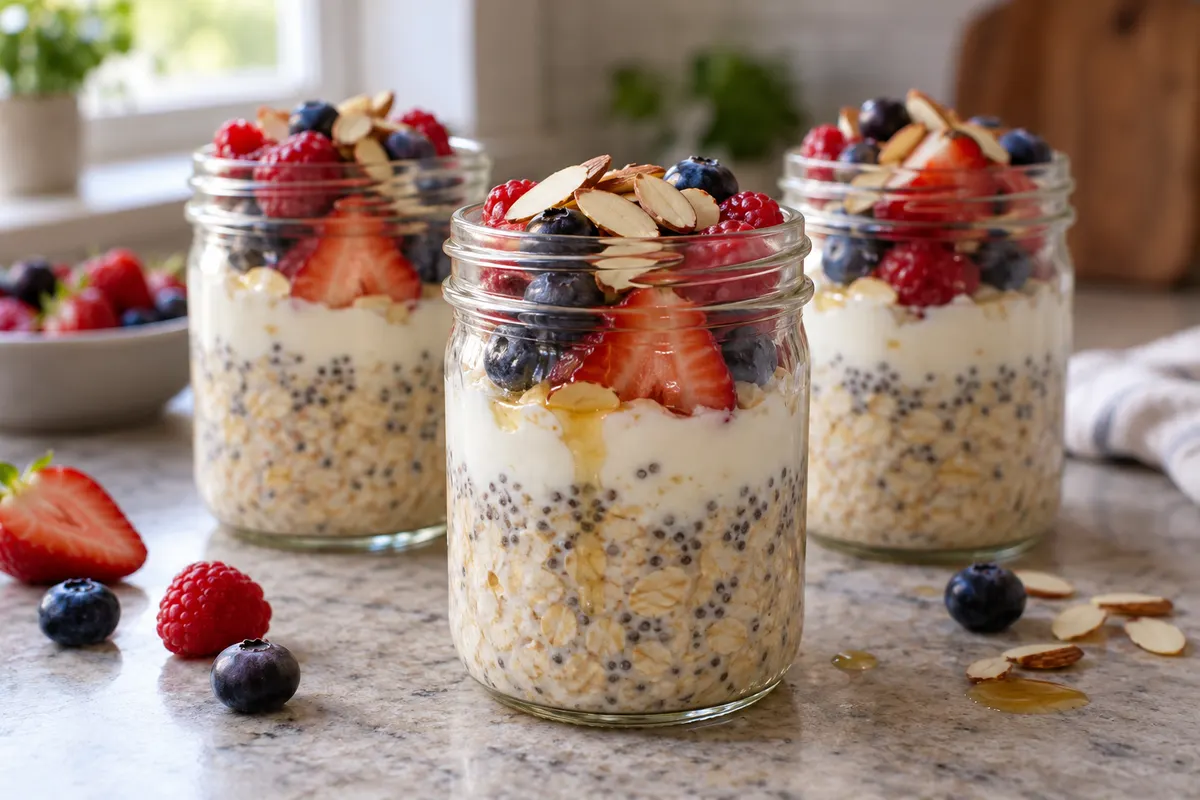
Overnight Oats
Overnight oats move breakfast preparation to the night before. Rolled oats absorb milk while yogurt and chia help make a spoonable base. There is no pan to wash in the morning, and a single-serving jar makes it easy to carry breakfast without portioning from a large bowl.
Overnight oats move breakfast preparation to the night before. Rolled oats absorb milk while yogurt and chia help make a spoonable base. There is no pan to wash in the morning, and a single-serving jar makes it easy to carry breakfast without portioning from a large bowl.
This recipe makes one serving. To prepare several breakfasts, multiply the base ingredients and divide into individual containers before refrigerating. Start with a few jars so you can adjust the texture and sweetness before repeating a larger batch. Keep crunchy and delicate toppings separate until eating.
📊 Estimated Per Serving
🥗 Ingredients for 1 serving
Rolled oats are the intended oat type; steel-cut oats do not soften in the same way. Milk and yogurt choices change both flavor and texture, so use products you enjoy plain. The tablespoon of chia absorbs liquid as the jar sits. Maple syrup or honey provides the listed sweetness, but flavored milk or yogurt may already be sweet. Berries and almonds are toppings with no specified quantity in the original recipe, so add them to preference rather than inventing a fixed amount.
👨🍳 Instructions
- 1
Use a clean container
Choose a clean lidded jar or food container with room to stir and space above the mixture. A wide opening makes the thickened oats easier to eat. Wash berries separately and dry them well if preparing toppings now. Keep milk and yogurt refrigerated until you are ready to mix.
- 2
Mix the base thoroughly
Combine rolled oats, milk, Greek yogurt, chia seeds, the chosen sweetener and vanilla. Stir down to the bottom and around the sides so no dry pockets remain. Chia can clump if it sits in one spot, so redistribute it throughout the liquid. Leave enough headroom for the oats to swell.
- 3
Chill to soften
Cover and refrigerate for at least four hours or overnight. Keep the container at 40°F or below, including during transport. Plan to use prepared jars within three to four days, subject to the earlier use-by or storage limit of the ingredients. Label the preparation date when making several jars.
- 4
Adjust and top
Stir before serving. If the mixture is thicker than you like, add a little more milk until it is spoonable. Add berries and sliced almonds just before eating so the fruit stays fresher and the nuts retain crunch. Eat cold, or transfer to a microwave-safe bowl if you prefer warm oats.
Batching, Refrigeration and Freezing
Make three or four jars by scaling the base evenly, then label the preparation date. Store them in the refrigerator rather than in the door of a warm lunch bag. Use within three to four days, or sooner if an ingredient’s label requires it. Once dairy and other ingredients are mixed, a fresh jar does not reset their original storage age.
For a longer plan, freeze the plain mixed base promptly in freezer-safe containers with expansion space. Thaw in the refrigerator and stir well; yogurt and oats may separate or become softer. Add fruit and nuts after thawing. Freezing individual bases is more practical than freezing a decorated jar with delicate fresh toppings. Glass must be specifically suitable for freezing.
Serving Safely
Refrigerate perishable ingredients and prepared jars within two hours of handling, or one hour above 90°F. Keep cold during transport with ice packs. A jar that smells fine is not proof it remained safe after sitting warm. If reheating a prepared portion, use a microwave-safe bowl, stir to remove cold spots and heat leftovers to 165°F. Never microwave a sealed jar or metal lid.
Variations and Swaps
Use a suitable plant milk and plant yogurt if you want a dairy-free version, checking labels for allergens. Certified gluten-free oats may be needed when gluten avoidance matters. Cinnamon can replace part of the vanilla flavor, and chopped fruit can replace berries. Nut-free toppings such as suitable seeds can replace almonds. Additions change the existing nutrition estimate, so calculate from your actual products if you need a closer estimate.
Frequently Asked Questions
Why are the oats too thick?
Chia, oats and different yogurts absorb different amounts of liquid. Stir in a little milk after chilling. Adjust one jar first, then use that result to change the next batch rather than guessing a large adjustment for every serving.
Can I use quick oats?
They can soften, but the result is usually less distinct and more porridge-like. Rolled oats are the better starting point for the texture described here. Steel-cut oats need a different preparation method.
Food-safety references: USDA leftover storage guidance and FoodSafety.gov cooking and reheating temperatures.
For planning across several recipes, read how long meal prep lasts, explore the macro planning guide, or return to all recipes.
Recipe guidance updated . Nutrition figures are the existing recipe estimates per serving. Ingredient brands, portion sizes, optional additions and substitutions change them; they have not been recalculated for your ingredients.