

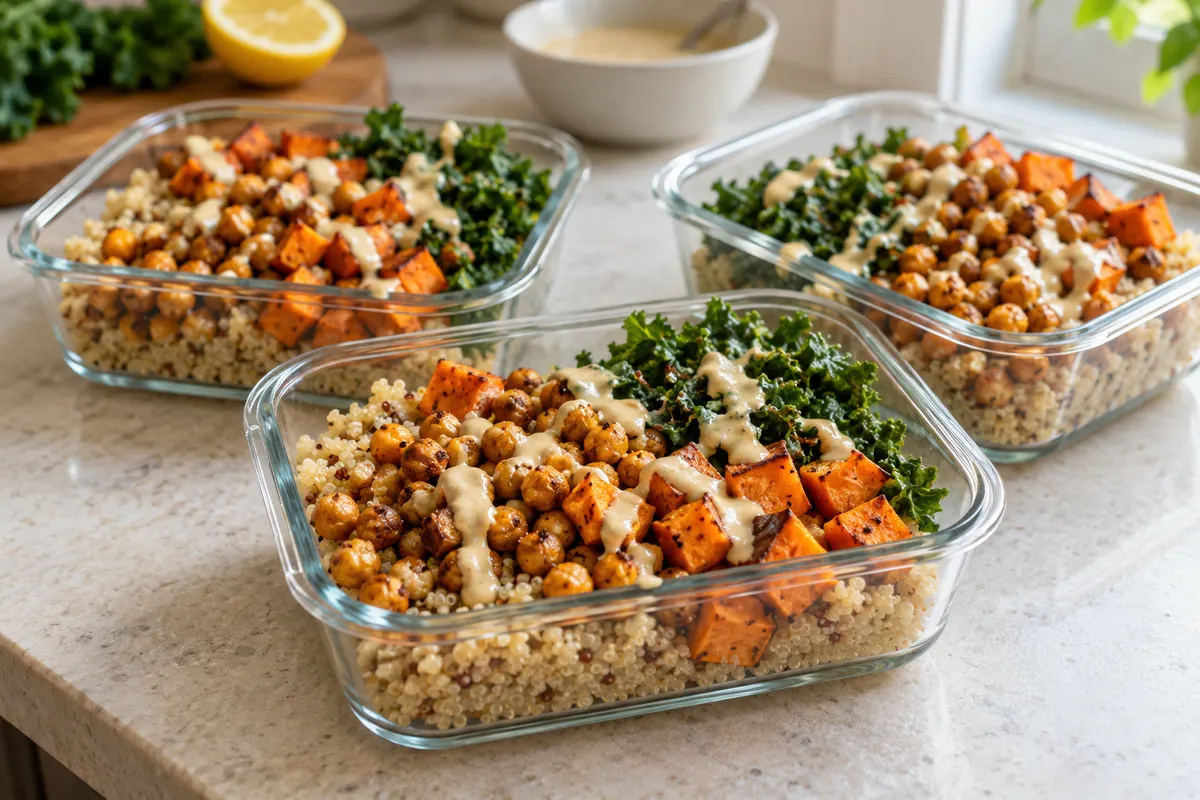
Quinoa Power Bowl
This quinoa bowl separates naturally into a grain base, roasted vegetables, chickpeas, kale and a spoonable dressing. Those components can be packed together or held separately for different textures. Roasting sweet potato and chickpeas on the same tray reduces the number of pans without requiring every ingredient to finish in one pot.
This quinoa bowl separates naturally into a grain base, roasted vegetables, chickpeas, kale and a spoonable dressing. Those components can be packed together or held separately for different textures. Roasting sweet potato and chickpeas on the same tray reduces the number of pans without requiring every ingredient to finish in one pot.
The listed batch makes two servings. The original method cooks one cup of quinoa in water, so the ingredient amount is dry quinoa. Split the cooked grain evenly between the two bowls rather than assuming a fixed cooked volume. If preparing more servings, expand tray space as well as ingredients.
📊 Estimated Per Serving
🥗 Ingredients for 2 servings
Rinse quinoa in a fine sieve and drain chickpeas well. The original list says one can without a can size, so use the package in your kitchen and recognize that yield can vary. Cut sweet potato into similar cubes and remove tough kale stems. Reserve some of the listed lemon and olive oil for the kale rather than silently adding another measured quantity. Tahini thickens at first when mixed with lemon; water helps loosen it into dressing.
👨🍳 Instructions
- 1
Cook the quinoa
Rinse the dry quinoa and cook with the original two cups of water, unless its package directs otherwise. Simmer covered until the grain is tender and water is absorbed, then let it stand briefly and fluff. Start checking around fifteen minutes rather than cooking to a rigid timer. Spread into shallow portions promptly after cooking.
- 2
Roast the vegetables and chickpeas
Heat the oven to 400°F. Toss sweet potato and drained chickpeas with most of the listed olive oil, cumin, salt and pepper. Spread on a tray with space between pieces. Roast until the sweet potato is tender, turning as needed; the original twenty-five-minute time is a starting point that depends on cube size and tray crowding.
- 3
Make the dressing
Whisk tahini with most of the lemon juice and two tablespoons of water. It may look tight or split before it becomes smooth. Add water a little at a time if needed to reach a pourable consistency. Season to preference. Keep the dressing in a separate small container if preparing the bowls for later.
- 4
Prepare kale and build bowls
Massage chopped kale with the reserved oil and lemon until it softens. Divide quinoa, sweet potato, chickpeas and kale between two containers. Keep dressing separate for maximum flexibility, especially if you plan to warm the grain and roasted components. Refrigerate the cooked components promptly rather than waiting for the entire tray to cool on the counter.
Meal-Prep Storage and Reheating
Use two shallow main containers and two small sauce pots. Keep kale separate if you want a cold element beside the warm quinoa. For a larger batch, roast on multiple trays so vegetables brown rather than steam. Use refrigerated portions within three to four days. Freeze the quinoa, chickpeas and sweet potato promptly for later meals, then add freshly prepared kale and dressing after thawing.
Reheat the grain and roasted components in a microwave-safe dish, loosely covered, with a splash of water if dry. Stir midway and verify 165°F throughout. The bowl can also be served cold when all ingredients were handled and stored safely. Add dressing after heating so you can adjust its consistency without repeatedly heating the whole sauce batch.
Cooling, Storage and Transport
Divide cooked food into shallow containers and refrigerate within two hours of cooking, or within one hour when the surrounding temperature is above 90°F. Do not leave a large batch on the counter until completely cold. Keep the refrigerator at 40°F or below. Use properly chilled cooked leftovers within three to four days; freeze later portions promptly instead of extending the refrigerator window.
Label containers with the preparation date. Thaw frozen portions in the refrigerator, and reheat leftovers to 165°F throughout, checking the center with a food thermometer. For a packed lunch, keep food cold with an insulated bag and ice packs until refrigeration is available. Discard food that has exceeded safe time or temperature limits; smell and appearance cannot establish safety.
Variations
Replace kale with another sturdy green, allowing for differences in tenderness. Try another cooked grain using its own water ratio and cooking directions. A yogurt-based dressing can replace tahini if sesame is unsuitable and dairy fits your needs, but the flavor and nutrition will change. Roasted carrots can replace some sweet potato. Keep the grain, vegetables and dressing amounts intentional rather than treating every substitution as nutritionally identical.
Frequently Asked Questions
Why are the chickpeas soft instead of crisp?
Moisture, a crowded tray and storage with dressing all soften chickpeas. Drain them well and leave space on the tray. Expect roasted chickpeas to lose some crispness after refrigeration, even if they were crisp when cooked.
Does cooked quinoa need refrigeration?
Yes. Cooked grains are perishable. Portion and refrigerate promptly, following the same time and temperature guidance as the rest of the meal. Leaving a covered pot on the counter overnight is not safe storage.
Food-safety references: USDA leftover storage guidance and FoodSafety.gov cooking and reheating temperatures.
For planning across several recipes, read how long meal prep lasts, explore the macro planning guide, or return to all recipes.
Recipe guidance updated . Nutrition figures are the existing recipe estimates per serving. Ingredient brands, portion sizes, optional additions and substitutions change them; they have not been recalculated for your ingredients.