

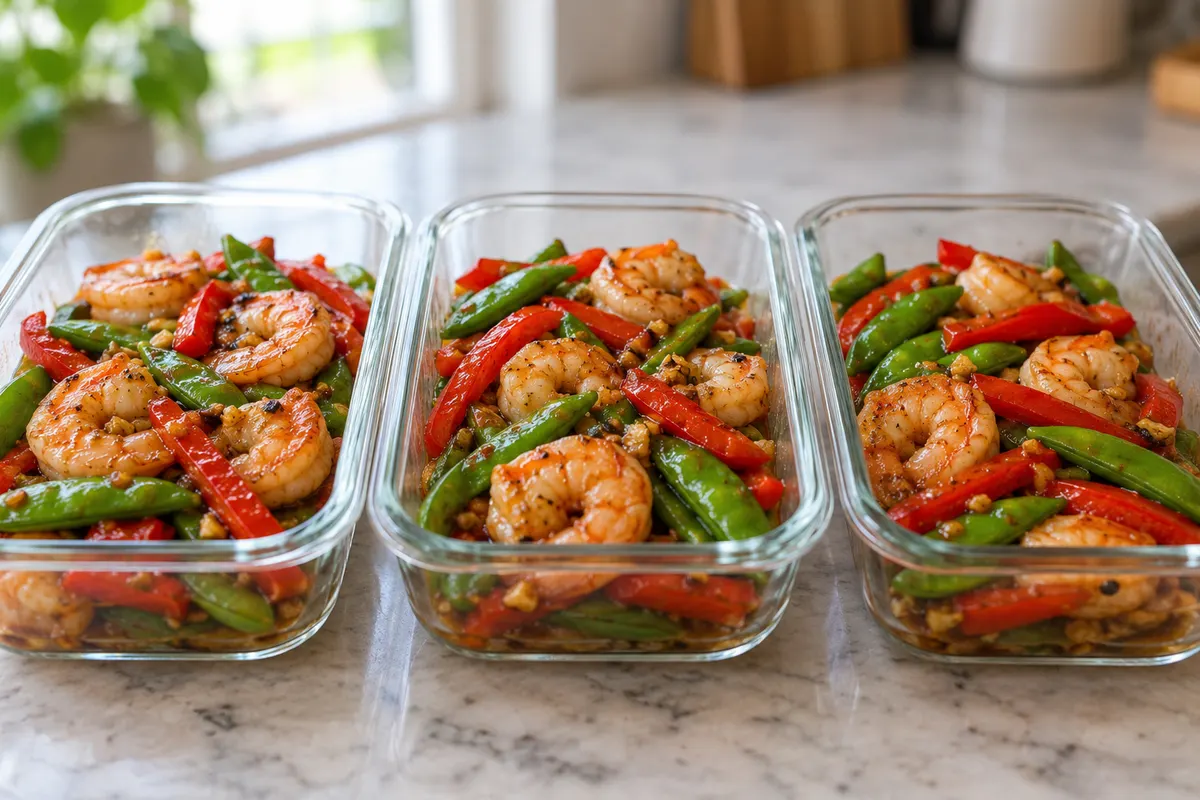
Shrimp Stir-Fry
Shrimp stir-fry is a compact meal-prep recipe because the shrimp and vegetables cook quickly and the sauce uses a small bowl. The key is organizing ingredients before the pan gets hot. Shrimp can overcook while you search for a spice or slice the pepper, so having everything ready matters more than a complicated technique.
Shrimp stir-fry is a compact meal-prep recipe because the shrimp and vegetables cook quickly and the sauce uses a small bowl. The key is organizing ingredients before the pan gets hot. Shrimp can overcook while you search for a spice or slice the pepper, so having everything ready matters more than a complicated technique.
The listed batch makes two servings. Rice or noodles can be added separately if desired, but they are not part of the existing ingredient list or nutrition estimate. Prepare two shallow containers and plan to eat these portions early in your rotation for the best texture.
📊 Estimated Per Serving
🥗 Ingredients for 2 servings
Use peeled, deveined shrimp and thaw frozen shrimp in the refrigerator according to its package. Pat them dry before cooking. Slice pepper evenly and trim snap peas as needed. Mix the listed teaspoon of cornstarch with a little cool water before adding it to the sauce. Use part of the listed sesame oil for cooking and the remainder in the sauce, rather than introducing an unspecified additional oil amount.
👨🍳 Instructions
- 1
Organize the sauce and vegetables
Whisk soy sauce, part of the sesame oil and the cornstarch slurry with a splash of water. Keep it close to the stove. Slice pepper, prepare snap peas and mince garlic and ginger before handling shrimp. Wash hands and surfaces after raw seafood contact, and have a clean plate available for cooked shrimp.
- 2
Cook shrimp without crowding
Warm the remaining sesame oil in a skillet or wok over medium-high heat, avoiding smoke. Add shrimp in a loose layer and turn as they cook. The original one-to-two-minutes-per-side range depends on their size. Cook until the flesh is pearly or white and opaque, then transfer to the clean plate rather than leaving them in the pan while vegetables cook.
- 3
Stir-fry the vegetables
Add pepper and snap peas to the pan. Stir until they begin to soften while retaining some bite; add a splash of water if needed to prevent sticking. Add garlic and ginger near the end so they become fragrant without burning. A lightly cooked vegetable texture stands up better to reheating than a soft first cook.
- 4
Combine and portion
Stir the sauce again to lift settled cornstarch, then pour it into the pan. Let it bubble and thicken before returning the cooked shrimp. Toss briefly to coat and heat through, then divide among two shallow containers. Do not keep simmering simply to reduce sauce after the shrimp have already reached their cooked texture.
Storage, Freezing and Reheating
Use two lidded containers, with any separately cooked grain in its own compartment. Refrigerated cooked leftovers have a three-to-four-day limit when handled properly, but planning shrimp for an earlier meal can preserve texture. Freeze a portion promptly if it is for later in the week. Freezing is an option, though cooked shrimp and crisp vegetables can become firmer or softer after thawing.
Thaw in the refrigerator. Reheat gently in a covered microwave-safe container, stirring between short intervals and checking that leftovers reach 165°F. A skillet with a splash of water also works; keep the heat moderate and stir. The sauce may need loosening after chilling. Reheating only one portion reduces repeated warming and helps avoid toughening all the shrimp at once.
Cooling, Storage and Transport
Divide cooked food into shallow containers and refrigerate within two hours of cooking, or within one hour when the surrounding temperature is above 90°F. Do not leave a large batch on the counter until completely cold. Keep the refrigerator at 40°F or below. Use properly chilled cooked leftovers within three to four days; freeze later portions promptly instead of extending the refrigerator window.
Label containers with the preparation date. Thaw frozen portions in the refrigerator, and reheat leftovers to 165°F throughout, checking the center with a food thermometer. For a packed lunch, keep food cold with an insulated bag and ice packs until refrigeration is available. Discard food that has exceeded safe time or temperature limits; smell and appearance cannot establish safety.
Variations and Swaps
Broccoli or thinly sliced carrots can replace some vegetables, but begin firmer vegetables earlier so shrimp do not wait in the hot pan. Use a suitable tamari in place of soy sauce if avoiding wheat, and check the rest of the labels. Tofu is a different protein option, requiring its own cooking approach. Sesame oil is an allergen concern for some people; choose a suitable alternative if necessary and expect a different flavor.
Frequently Asked Questions
Why did the sauce become watery?
Wet shrimp, frozen vegetables or too much added water can dilute the sauce. Dry shrimp, cook excess vegetable moisture away and stir the slurry immediately before use. Let the sauce bubble before briefly returning cooked shrimp.
Can I double everything in one pan?
Double the ingredients but cook in rounds if needed. Crowding lowers the effective pan heat and releases more water. Combine the finished components only when the sauce can coat them without prolonged cooking.
Food-safety references: USDA leftover storage guidance and FoodSafety.gov cooking and reheating temperatures.
For planning across several recipes, read how long meal prep lasts, explore the macro planning guide, or return to all recipes.
Recipe guidance updated . Nutrition figures are the existing recipe estimates per serving. Ingredient brands, portion sizes, optional additions and substitutions change them; they have not been recalculated for your ingredients.