

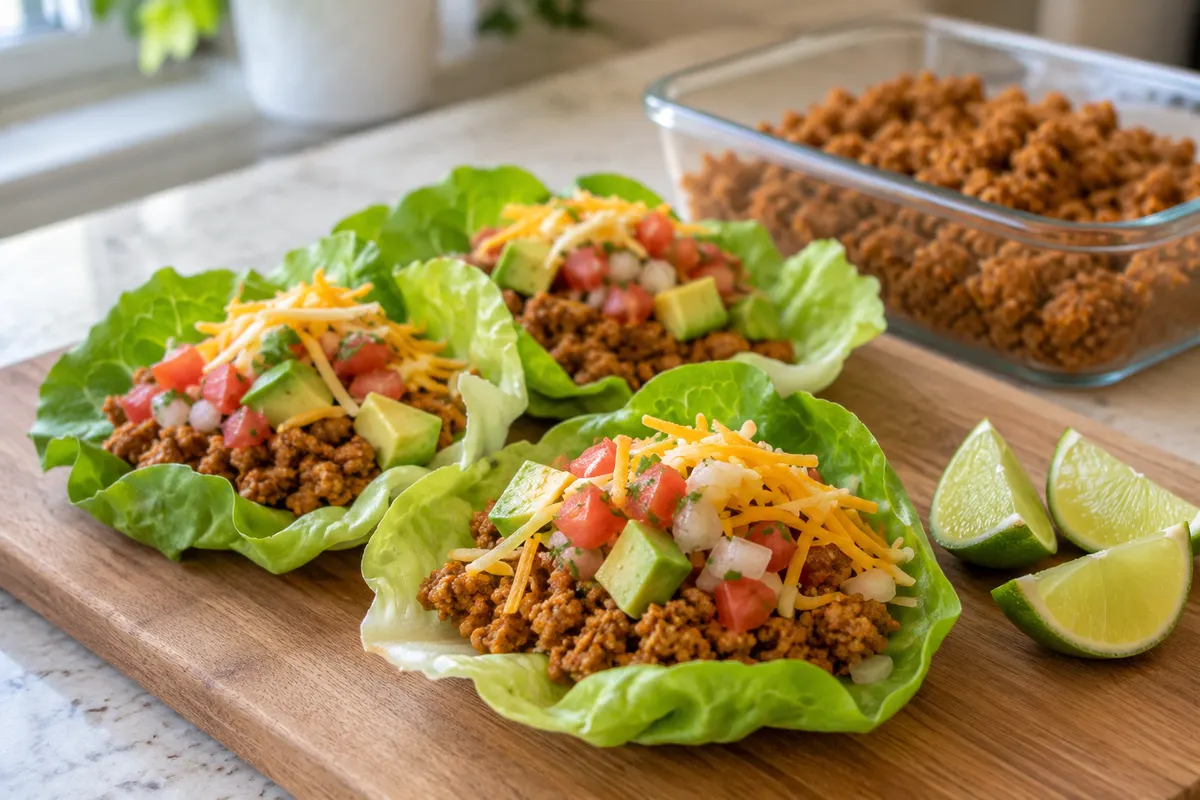
Turkey Taco Lettuce Wraps
Turkey taco lettuce wraps work for meal prep when the filling and leaves are stored separately. The warm seasoned turkey can be reheated while lettuce, avocado and pico de gallo stay cold. Assembly takes place just before eating, which prevents a ready-made wrap from becoming wet and difficult to pick up.
Turkey taco lettuce wraps work for meal prep when the filling and leaves are stored separately. The warm seasoned turkey can be reheated while lettuce, avocado and pico de gallo stay cold. Assembly takes place just before eating, which prevents a ready-made wrap from becoming wet and difficult to pick up.
The listed batch makes four servings. Divide the cooked turkey filling into four portions and share the toppings according to preference. Lettuce leaf sizes vary, so the number of wraps is less reliable than dividing the filling. A packed serving may contain several small leaves rather than one large wrap.
📊 Estimated Per Serving
🥗 Ingredients for 4 servings
Keep the original ground turkey, chili powder, cumin and paprika amounts. The listed turkey is 93% lean; using another blend changes the nutrition estimate and how much liquid or fat appears in the skillet. Choose intact butter lettuce leaves, rinse and dry them thoroughly. Avocado is best cut near serving to limit browning. Keep pico de gallo in a separate pot so its liquid does not soften the leaves.
👨🍳 Instructions
- 1
Cook the filling
Place ground turkey in a suitable skillet over medium heat. Break it into small crumbles as it cooks so there are no thick cold clumps. Drain excess fat if needed, then add chili powder, cumin, paprika and a splash of water. Stir so the seasoning coats the meat rather than staying dry on the pan.
- 2
Verify the turkey temperature
Simmer until the seasoning is distributed and excess liquid has reduced. Ground poultry should reach 165°F; use a food thermometer in a representative thick area rather than judging by color alone. Add a little water if it becomes dry before reaching temperature. Transfer to shallow portions promptly once cooked.
- 3
Prepare the cold components
Separate lettuce leaves gently, wash under running water and dry well. Keep them in a clean container with a dry paper towel if useful for excess moisture. Portion cheese and pico de gallo separately. Wash the lime before cutting. Use clean utensils and a board that has not been in contact with raw turkey.
- 4
Assemble at serving time
Warm one portion of filling if desired, then spoon it into the lettuce leaves. Add avocado, pico de gallo, shredded cheese and a squeeze of lime. Avoid overfilling a leaf; two smaller wraps are often easier to hold. If packing ahead, carry filling and toppings in separate compartments and assemble when ready to eat.
Four Portions Without Soggy Lettuce
Store turkey in four shallow lidded containers and keep dry lettuce and toppings cold separately. Use refrigerated cooked filling within three to four days, following any shorter label guidance for toppings. Cut avocado near serving if possible. For later meals, freeze the cooked filling promptly in individual freezer-safe portions. Make fresh lettuce and toppings after thawing rather than freezing assembled wraps.
Reheat turkey in a covered microwave-safe dish with a splash of water, stirring midway, until it reaches 165°F throughout. A skillet over moderate heat also works. Keep lettuce, avocado, cheese and pico out of the reheating container. Reheat only the filling you need and keep remaining portions refrigerated. Repeatedly warming a large communal tub makes handling and temperature control harder.
Cooling, Storage and Transport
Divide cooked food into shallow containers and refrigerate within two hours of cooking, or within one hour when the surrounding temperature is above 90°F. Do not leave a large batch on the counter until completely cold. Keep the refrigerator at 40°F or below. Use properly chilled cooked leftovers within three to four days; freeze later portions promptly instead of extending the refrigerator window.
Label containers with the preparation date. Thaw frozen portions in the refrigerator, and reheat leftovers to 165°F throughout, checking the center with a food thermometer. For a packed lunch, keep food cold with an insulated bag and ice packs until refrigeration is available. Discard food that has exceeded safe time or temperature limits; smell and appearance cannot establish safety.
Variations
Use another sturdy lettuce if butter lettuce leaves are small, or turn the same components into a salad bowl. Tortillas or rice can be added separately when lettuce alone does not fit your meal plan; they change the nutrition estimate. Omit cheese or use a suitable alternative if avoiding dairy. Adjust chili powder to your preferred flavor, and check spice blends for added salt or other ingredients.
Frequently Asked Questions
Can I pack the wraps already assembled?
You can, but warm filling and wet toppings soften lettuce quickly. Separate compartments give a better result and let you heat only the turkey. If assembling ahead, keep the entire meal properly refrigerated and expect softer leaves.
Why is the turkey dry?
A lean grind and prolonged cooking can dry the filling. Use the thermometer endpoint and add a splash of water when reheating. More sauce can improve moisture, but include any added ingredients in your own nutrition estimate.
Food-safety references: USDA leftover storage guidance and FoodSafety.gov cooking and reheating temperatures.
For planning across several recipes, read how long meal prep lasts, explore the macro planning guide, or return to all recipes.
Recipe guidance updated . Nutrition figures are the existing recipe estimates per serving. Ingredient brands, portion sizes, optional additions and substitutions change them; they have not been recalculated for your ingredients.